With this guide, we complete our tour of Korea’s Big 5 university hospitals — see our overview of all five. Seoul St. Mary’s Hospital rounds out the list with a distinction none of the other four can claim. In fact, it is Korea’s flagship center for organ transplantation, tracing back to the country’s first successful kidney transplant in 1969.
What Makes Seoul St. Mary’s Hospital Different
Seoul St. Mary’s Hospital (SSMH) is the representative teaching hospital of the Catholic University of Korea’s College of Medicine, operating under the Catholic Medical Center network of eight affiliated hospitals nationwide. Originally opened in 1980 as Kangnam St. Mary’s Hospital, the first general hospital in Gangnam, it was rebuilt and renamed in 2009. The new 22-story tower holds roughly 1,200 to 1,300 beds, making it one of the largest single-building hospitals in Korea.
In March 2023, Newsweek’s World’s Best Hospitals ranking placed Seoul St. Mary’s Hospital 91st among more than 2,300 hospitals worldwide. That’s a rare distinction for a Korean institution outside Seoul National University or Asan.
The hospital sits in Banpo-dong, Seocho-gu, directly across the Han River from Gangnam, and is one of the more accessible Big 5 hospitals for patients staying near the Express Bus Terminal or Seocho areas.
Seoul St. Mary’s Hospital’s Signature Strength: Organ Transplantation
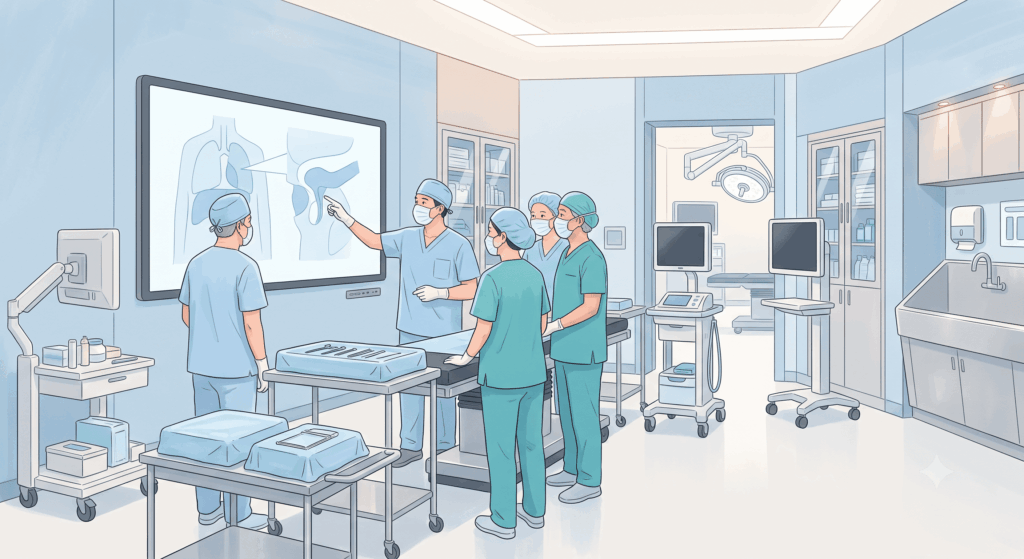
If there’s one reason international patients specifically seek out this hospital, it’s the Organ Transplantation Center. The story goes back to 1969, when the hospital’s predecessor (then Myeongdong St. Mary’s Hospital) performed Korea’s first kidney transplant — a full 56 years of institutional experience in a field where outcomes are heavily volume-dependent.
That legacy shows in the numbers. As of December 2025, the liver transplant team reached its 1,500th case, and the kidney transplant program has surpassed 3,000 procedures. According to hospital-published data cited in medical tourism directories, the center has also performed roughly 7,000 bone marrow transplants and around 5,500 cornea transplants — among the highest volumes in the country for both.
There’s also a research edge worth noting. In a 2025 comparative study presented at the Asian Transplantation Week, Catholic Medical Center researchers found that Korea’s living-donor liver transplant survival rates outperformed the U.S. national average, based on UNOS and KOTRY registry data. In other words, this speaks directly to the quality concerns international transplant patients tend to have.
For context on how this compares to Korea’s other transplant leaders, see our Samsung Medical Center guide. However, for liver transplant volume specifically, Asan Medical Center’s program remains the world’s largest by case count — covered in our robotic surgery and Big 5 technology guide.
International Healthcare Center: Services for Overseas Patients
Seoul St. Mary’s Hospital’s International Healthcare Center (IHCC) first opened in 2003 and has grown into a dedicated one-stop service for patients without Korean National Health Insurance. Core services include:
- Interpretation in five languages — English, Japanese, Chinese, Russian, and French, plus additional coordinator support for other languages on request
- A dedicated international-patient ward with around 22 beds, designed to reduce the language and cultural gap between patients and care teams
- 24-hour emergency care with English-speaking physicians always on duty at the Emergency Center on the main building’s first floor
- Pre-travel services including immigration medical exams, vaccinations, and prescription support before patients even land in Korea
- Same-day one-stop care for consultation, admission, treatment, and discharge where clinically appropriate
The center is staffed by physicians who split time between clinical departments and international patient care. For example, family medicine and emergency medicine specialists here also hold teaching positions at the medical school. As a result, patients typically get more consistent continuity of care than a purely administrative liaison office can offer.
Technology and Specialty Centers
Seoul St. Mary’s operates 25 specialized centers across more than 48 clinical departments, including the Catholic Comprehensive Cancer Institute, the Heart and Brain Vascular Center, and the Eye Center. Surgical technology on site includes the da Vinci robotic surgical system, CyberKnife, and TomoTherapy — with hospital-published figures citing roughly 8,000 da Vinci procedures performed to date, alongside around 1,000 TAVI (transcatheter aortic valve implantation) cases.
If robotic surgery specifically is your priority, our dedicated comparison of robotic surgery programs across the Big 5 hospitals breaks down how Seoul St. Mary’s program stacks up against Severance, Asan, SNUH, and Samsung.
Getting There and Practical Access
Address: 222 Banpo-daero, Seocho-gu, Seoul (반포대로 222)
By subway: Express Bus Terminal Station (Line 3, 7, or 9), Exit 4, about a 5-minute walk — or Exit 3 for the hospital shuttle bus. Seocho Station (Line 2), Exit 7, also connects via shuttle (about 1km to the hospital).
By air: From Incheon International Airport, airport limousine buses connect directly toward the Express Bus Terminal / Seocho area.
Visa note: Most international patients enter Korea for treatment purposes on a C-3-3 (short-term medical visa) or G-1-10 visa depending on treatment length. For the full breakdown of visa types, required documents, and application steps, see our Korea Medical Visa Guide.
Is Seoul St. Mary’s Hospital Right for You?
This hospital makes the most sense for patients whose primary need is organ transplantation, hematology/oncology, or cardiovascular care — areas where its transplant heritage and specialty center depth give it a genuine edge over the other Big 5 hospitals. For general executive health checkups or dermatology-adjacent procedures, SNUH or Samsung Medical Center may be a more direct fit.
With this guide, our Big 5 series is complete. If you’re still deciding which of the five hospitals fits your specific condition, our Top 5 University Hospitals in Seoul overview compares all five side by side.
Ready to plan your treatment in Korea? Contact us for help navigating hospital selection, appointment scheduling, and coordination with Seoul St. Mary’s International Healthcare Center — from someone who understands the system from the inside.